
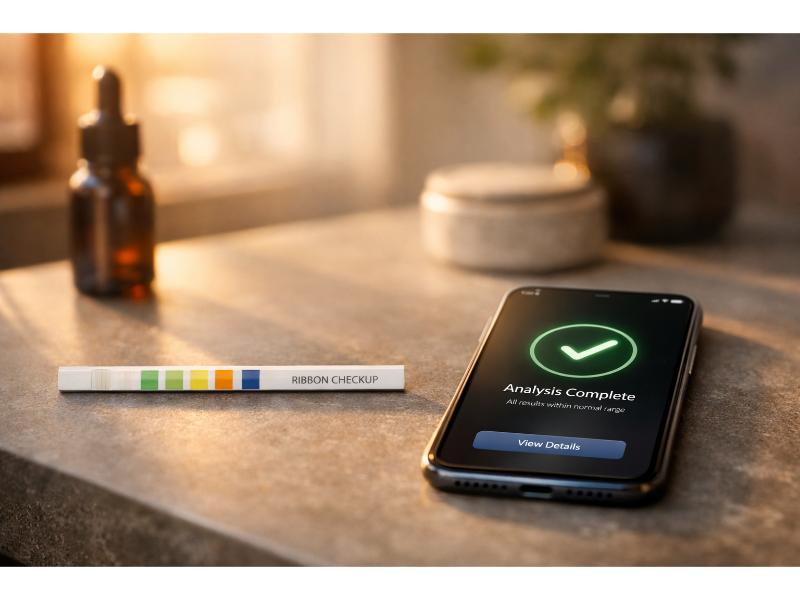
We’ve all been there, waking up with that telltale “twinge” or feeling like something is just a little off with our bodies. In the past, this usually meant a stressful trip to the clinic and a long wait in a cold exam room. Today, at-home urine test kits offer a way to get quick answers from the comfort and privacy of your own bathroom.
While these kits are incredibly convenient, it’s completely normal to feel a bit overwhelmed by the tiny color squares and technical terms. This guide is here to walk you through the process, helping you understand what those colors mean and how to use these tools to better advocate for your health.
What are at-home urine test kits and how do they work?
At-home urine test kits, often called “dipsticks,” are small plastic strips treated with special chemicals. When these chemicals come into contact with your urine, they change color based on what they find. It’s a bit like a science experiment in your hand, one that provides a snapshot of your metabolic and urinary health in about sixty seconds.
Most kits are designed for specific needs, such as checking for a Urinary Tract Infection (UTI) or monitoring kidney health. Some of them can be found at most local drugstores for anywhere between $10 and $50.
However, advanced dipsticks like those offered by Ribbon Checkup, they offer it together with a monthly subscription of their app, which automatically reads the results for you and you don’t have to endure the headache of interpreting the color chart that comes with dipsticks.
What is a 10-parameter test?

If you’ve looked for a “comprehensive” kit, you’ve likely seen the term 10-parameter test. This simply means the strip has ten different chemical pads that check for ten different things at once. These typically include:
- Leukocytes & Nitrites: Often indicate signs of infection.
- Protein: An indicator of how your kidneys are filtering.
- Glucose & Ketones: Markers for blood sugar and fat metabolism.
- pH & Specific Gravity: Measures of acidity and hydration levels.
- Bilirubin & Urobilinogen: Markers for liver and gallbladder health.
- Blood: To check for microscopic traces of blood in the urine.
How accurate are these tests compared to a doctor’s visit?
It is reassuring to know that these strips are very similar to the ones used in professional clinics. However, they are intended to be a screening tool, not a final diagnosis.

Health studies show that these tests are excellent at “ruling out” problems. For example, if you are checking for a UTI, the test has an overall diagnostic accuracy of about 70% at detecting certain markers. However, they can sometimes be “overly sensitive,” meaning they might show a positive result when there isn’t a serious infection. This is why your doctor will usually follow up a home test with a formal lab culture.
What causes a false positive or false negative?
Seeing a result that doesn’t match how you feel can be confusing. Several common factors can “trick” the test:
- Vitamin C: High doses of Vitamin C (from supplements or juice) can actually interfere with the chemical reaction, leading to a “false negative” for blood or glucose.
- Medications: Certain antibiotics or supplements can change the color of your urine, making the strip hard to read.
- Timing: This is the most common error. If you wait too long to read the strip, say, five minutes instead of the recommended sixty seconds, the air can cause the colors to change (oxidation), giving you a false positive for protein.

What do the different markers on a urine strip mean for your health?
Reading a color chart can feel like trying to solve a puzzle. Here is a simple breakdown of the most common markers and what they generally tell us:
| Marker | What it looks for | What a positive might mean |
| Leukocytes | White blood cells | Your body may be fighting an infection or irritation. |
| Nitrites | Bacterial waste | Certain bacteria (common in UTIs) are present. |
| Protein | Albumin | Your kidneys might be working extra hard or you’re dehydrated. |
| Blood | Red blood cells | Possible infection, kidney stones, or heavy exercise. |
| Ketones | Fat breakdown | Your body is using fat for fuel (common in Keto diets or fasting). |
How do I read the color chart accurately?
Most kits come with a color map on the side of the bottle. To get the best reading:
- Use Good Lighting: Hold the strip under a bright, natural light.
- Compare Quickly: Match the pad to the bottle within the exact timeframe listed (usually 30 to 60 seconds).
- Don’t Touch: Avoid letting the test pads touch the bottle or your skin, as this can contaminate the result.
How do you perform an at-home urine test correctly?
To get the most accurate result, the “how” is just as important as the “what.” Following a clean procedure ensures that the markers we see are actually from your urine and not from external bacteria.
Step-by-Step Guide:
- Wash Your Hands: Always start with clean hands.
- The “Mid-Stream” Catch: (Details below).
- The Dip: Immerse all pads on the strip into the urine sample for about 1-2 seconds.
- The Tap: Gently tap the edge of the strip on a paper towel to remove excess liquid. This prevents colors from “bleeding” into each other.
- The Wait: Hold the strip horizontally and wait for the exact time required by your kit.
Why is the “mid-stream” collection method important?

You’ll often see the term “clean catch” or “mid-stream.” This just means you shouldn’t collect the very first bit of urine that comes out. By letting the first bit go into the toilet and catching the “middle” portion in a clean cup, you flush away any skin cells or surface bacteria that might cause a false positive for an infection.
What should you do after you get your results?
First, take a deep breath. A single “abnormal” square on a plastic strip doesn’t always mean there is a health crisis. It is a piece of data to help you and your healthcare provider start a conversation.
- Document it: Take a clear photo of your strip next to the color chart. This is incredibly helpful for your doctor to see.
- Hydrate: If your “Specific Gravity” or “Protein” is slightly high, you might just be dehydrated. Drink some water and see if your symptoms improve.
- Follow up: Use the results as a bridge. Instead of saying “I think I have a problem,” you can tell your doctor, “I took a home test and it showed positive for nitrites.”
When is it time to stop home testing and see a doctor?
Home kits are great for monitoring, but they aren’t a substitute for professional care. You should contact a doctor immediately if:
- You have a fever, chills, or back/flank pain (which could suggest a kidney infection).
- Your symptoms (like burning or urgency) are getting worse despite “negative” home results.
- You see visible blood in your urine.
- You are pregnant and experiencing any new urinary symptoms.

Key Takeaway
- These kits are great for a fast “check-in” on your health, but they are screening tools, not a final diagnosis.
- For the most accurate result, don’t catch the very first part of your urine. Start peeing, then catch the “middle” portion in your cup.
- Use a timer! Reading the strip too late (after a few minutes) can cause the colors to change and give you a false result.
- Be aware that taking high doses of Vitamin C supplements can sometimes hide blood or sugar in your results.
- If the test looks “normal” but you still feel sick, have a fever, or are in pain, call your doctor anyway. Trust your body over the strip.
- Take a picture of your results next to the color chart so you can easily show your healthcare provider exactly what you saw.
Frequently Asked Questions
Are at-home urine tests as accurate as the ones at the doctor’s office?
These tests use very similar technology to clinic dipsticks and are excellent for a quick health screening. However, they are more sensitive to timing and storage errors, so a doctor’s lab test is still the “gold standard” for a final diagnosis.
Can these kits detect early signs of kidney disease?
Yes, these tests can check for protein (albumin), which is often one of the earliest signs that kidneys aren’t filtering perfectly. If you consistently see a positive result for protein, it is a good idea to schedule a check-up for a more detailed blood test.
What should I do if my test is positive but I feel perfectly fine?
Don’t panic, as certain foods, medications, or even intense exercise can sometimes cause a temporary “false” positive. Simply stay hydrated and try the test again the next day, or reach out to your doctor if you’re concerned.
Does a negative result mean I definitely don’t have a UTI?
Not necessarily, because some types of bacteria don’t produce the “nitrites” that the strip looks for. If you are in pain or have a fever, you should still consult a healthcare provider even if the strip shows a negative result.